Events
January 12, 2024 - 20 years of the DPA master's degree
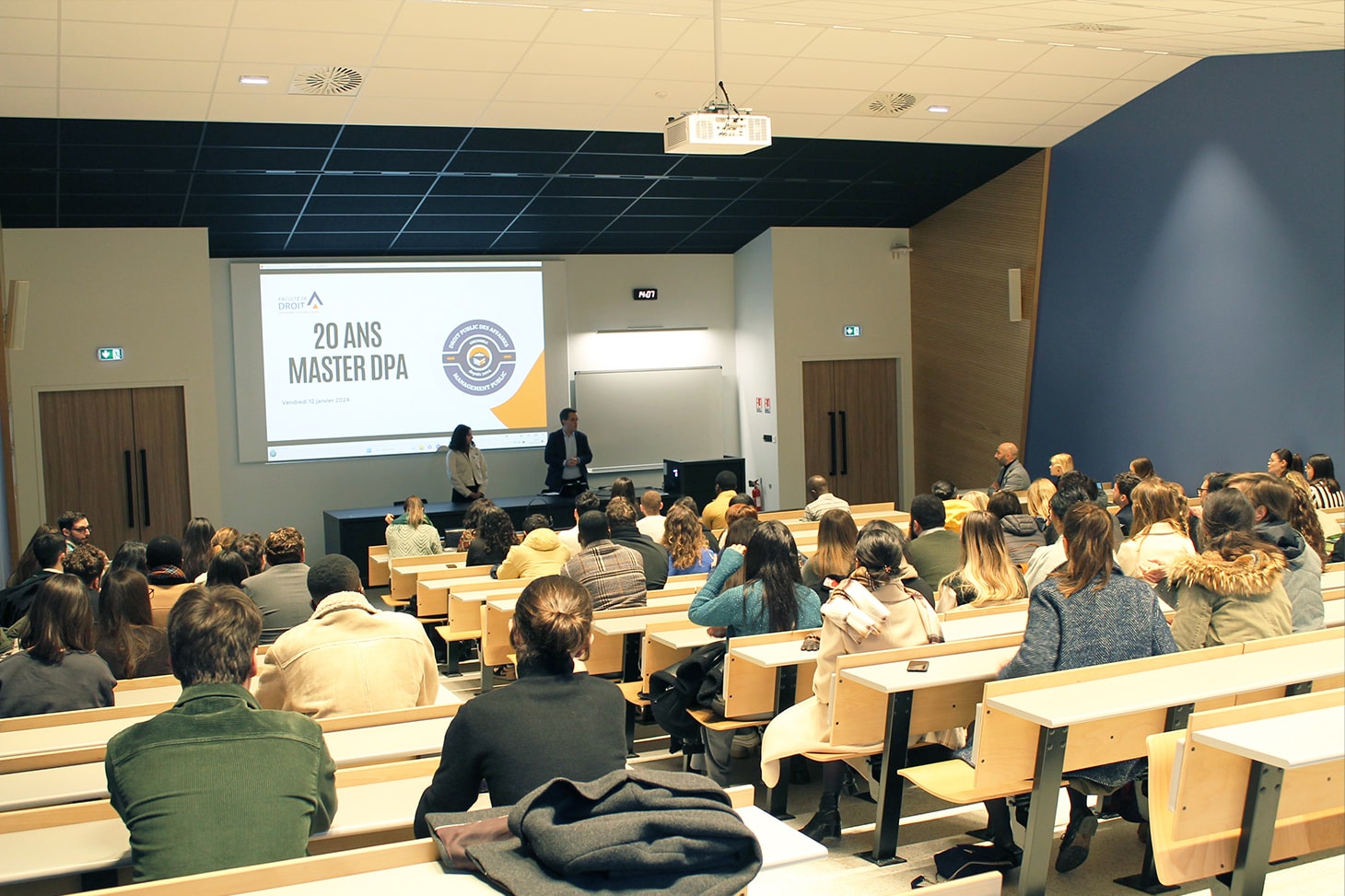 On Friday afternoon, January 12, 2024, the 20th anniversary of the Master's degree in Public Business Law (DPA) at the Grenoble Law School was celebrated.
This event was organized in partnership with the master's degree alumni association.
More than 100 graduates from 20 different classes attended the event. The founder and director of the DPA master's program, Mr. Sébastien Bernard, was present alongside the Dean of the Faculty of Law, Mr. Jean-Christophe Videlin, to welcome them. Faculty members and current master's students also participated in the event.
The afternoon began with a plenary conference entitled "Feedback on careers in public law," during which 11 alumni presented their varied career paths from the 2004-2005 class to the 2020-2021 class. A wide variety of careers were represented: public purchaser, doctor of public law, lawyer, general manager of services, legal and financial consultant, local government lawyer, investment director, operations manager, corporate contract manager, etc.
"Career workshops" were then organized to facilitate discussions between current and former students on the following four areas: public bodies; lawyers and consultants; local authorities; and businesses.
Finally, a convivial moment conducive to discussion extended the evening, which ended with the general meeting of the alumni association of the Master's program in Public Business Law.
April 11, 2022 - Renewal of the partnership between the Faculty of Law and Grenoble IAE
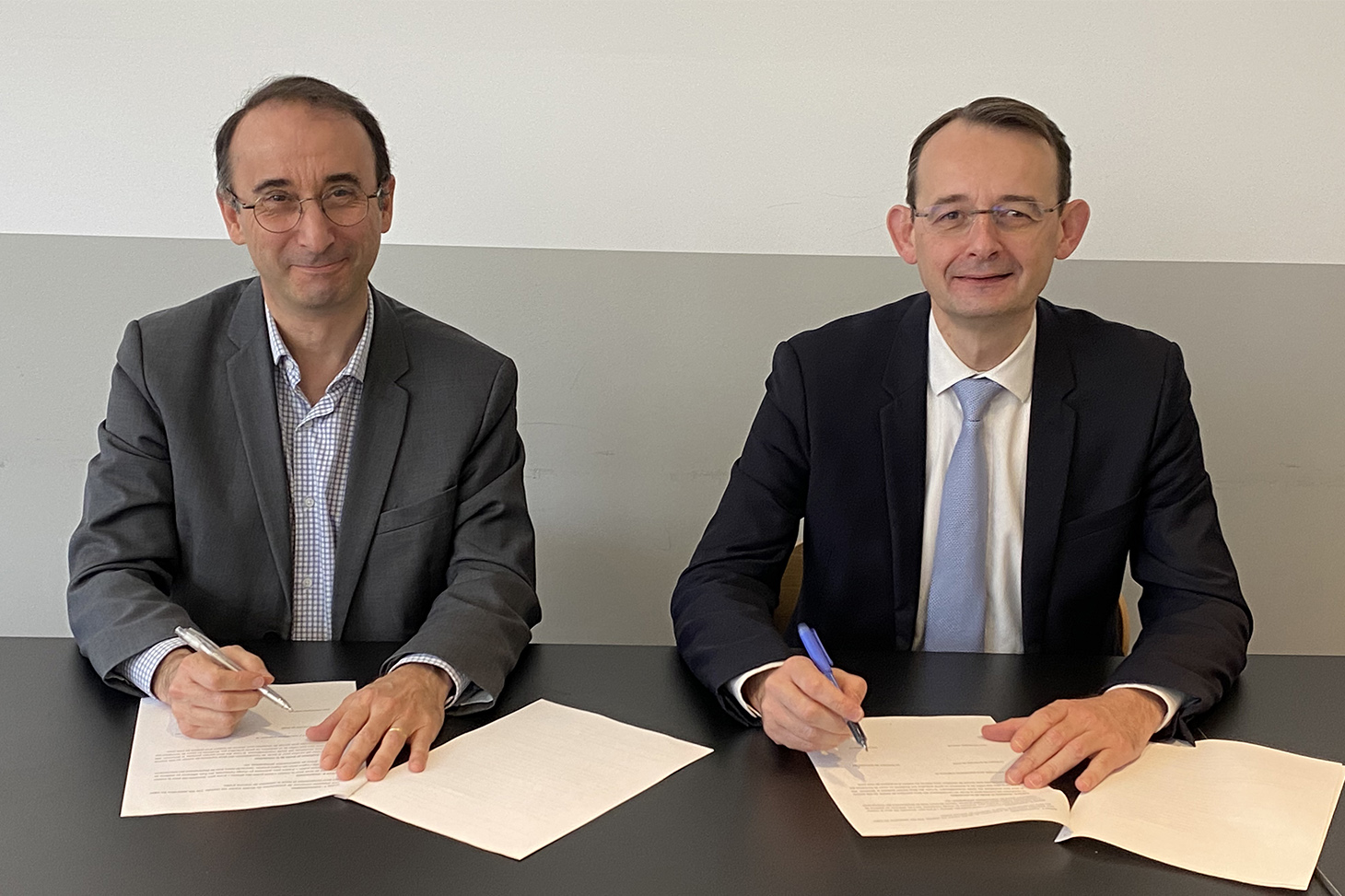 Signing of the partnership agreement by Jean-Christophe Videlin, Dean of the Grenoble Faculty of Law, and Christian Defelix, Director of Grenoble IAE
The dual master's degree in Public Business Law (DPA) / Public Management was created five years ago as part of a partnership between the Faculty of Law and Grenoble IAE. The aim is to give students dual expertise in law and management, to promote their integration and professional success as high-level lawyers.
The partnership agreement between the two institutions was renewed this year to support the growing popularity of this dual master's degree, which is attracting more and more students. While in the early years, around a third of the Public Business Law master's program cohort chose to pursue the dual degree, in 2022, 18 out of 22 students made this choice.
Several factors explain the success of this dual degree program.
Firstly, after five years of existence, the benefits of management skills, in addition to legal skills, have been confirmed in the field. Indeed, law students entering the job market, although very comfortable in their field, also need managerial skills when they have to supervise employees, work in project mode, communicate or manage clients, whether they work in a public authority, a law firm or a private company.
Secondly, the unique nature of this program makes it attractive on a national scale. It also stands out within the Faculty from the dual degree program with Grenoble École de Management (a selective program open to Master's 2 students) because it is open to all DPA Master's students, without conditions, and because it specializes in public sector management. As a result, no less than one-third of the courses taught at Grenoble IAE focus exclusively on the public sector. The other two-thirds of the courses are shared with those of the Master's in Business Administration (MAE), which offers general management training to students from other fields (engineering schools, health, doctoral students from all disciplines, etc.).
Thirdly, while obtaining a dual degree has no impact on the nature of the first job, which is very often legal, held by graduates, it does have positive effects on the following parameters:
> the speed with which students find their first job;
> the level of remuneration obtained;
> the possibility of advancing more quickly to more versatile positions (for example, a position as chief administrative officer of a small local authority may be accessible after 5 to 6 years, compared to 10 to 12 years on average without the dual degree, according to statistics compiled among master's degree graduates).
 Grenoble Law SchoolLaw at the top