Presentation of the STEEN & BVBV thematic programs at the UGA Graduate School
Training
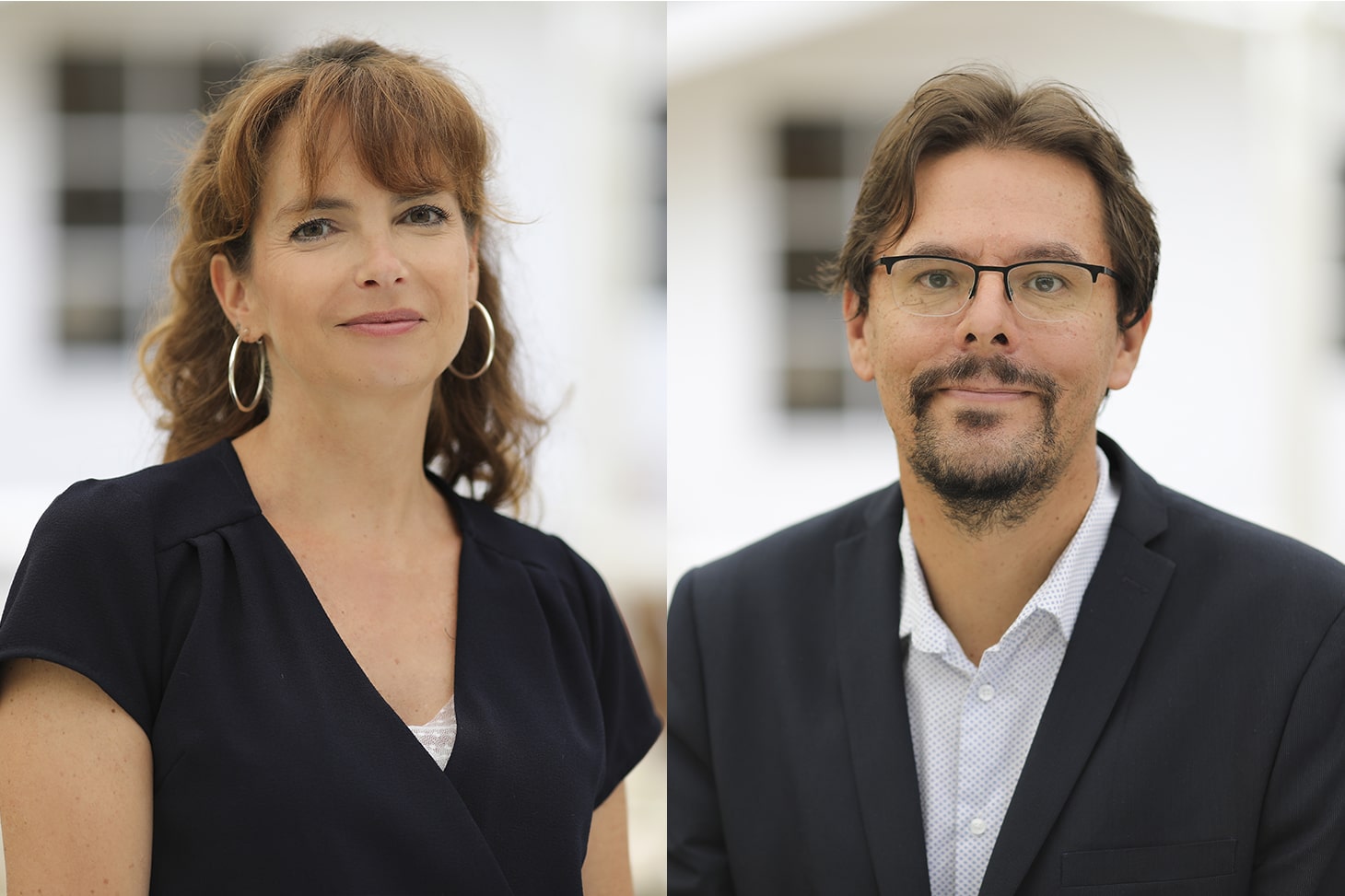
The UGA Graduate School (GS@UGA) currently offers 15 thematic programs, two of which are associated with master's degrees from the Grenoble Law School. We interviewed Anne-Sophie Brun-Wauthier, Senior Lecturer in Private Law, and Serge Slama, Professor of Public Law, both of whom are involved in these programs.
What is the purpose of graduate school?
S. Slama: The UGA Graduate School is a transdisciplinary research training program that prepares French and international students, during their two-year master's degree, for doctoral research or professional integration in cross-disciplinary fields. It is structured around fifteen thematic programs focused on scientific and/or societal issues and brings together several master's degree programs.
A.-S. Brun-Wauthier: As GS@UGA students are enrolled in master's programs in different departments, the graduate school is a truly interdisciplinary environment. This encourages different teaching methods and ensures that research is not confined to a single discipline.
S. Slama: The idea behind GS@UGA is also to attract high-potential students from around the world to themed programs—while they are pursuing their master's degrees.
A.-S. Brun-Wauthier: However, the GS is not reserved for international students. There is a mix of international and French students. All students can apply, but not all will be eligible for a scholarship...
What are the requirements for receiving an incoming mobility grant?
A.-S. Brun-Wauthier: Only international students, i.e. those who did not obtain their high school diploma in France, may apply, provided they are not receiving any other scholarship.
S. Slama: The incoming scholarship, intended for international students, is set at €16,000 for the two years of study. The idea is to attract the best international students. The scholarship is not awarded on the basis of social criteria. Scholarship recipients must then enroll in our M1 and M2 programs and in GS@UGA and complete internships in a UGA laboratory (such as CRJ, CESICE, or CERDAP2).
Can you tell me about the STEEN thematic program?
S. Slama: The STEEN program focuses on the theme of "society in economic, ecological, and digital transition." It is one of the only thematic programs at the GS@UGA graduate school where all courses are taught in French.
STEEN brings together five master's degrees in social sciences from five different departments, including the master's degree in civil liberties: Law and History of Human Rights (DHDH) from the Faculty of Law in Grenoble.
Each master's program offers 3 to 4 students at the M1 level the opportunity to follow the thematic program for two years (M1 and M2). The goal is to not exceed 20 students in total.
Students enrolled in the STEEN thematic program are required to participate in an orientation day, a project workshop (in October, such as Green University), a winter university (in February), a summer university (in June), and a group research project.
During summer and winter schools, students participate in a week-long interdisciplinary program on a specific topic, working alongside scientists from all disciplines.
Participation in the STEEN program exempts students from taking a 24-hour M1 or M2 course (equivalent to 6 ECTS credits) each year.
At the end of graduate school, students must submit a research thesis, written in pairs (two students from two different departments), on a cross-disciplinary topic, under the supervision of a professor of their choice.
I would add that the STEEN thematic program also fits in well with the University Diploma in Environmental Law that the Faculty of Law has been offering for the past year. In recent years, I have seen the emergence of a new profile of students who want to work in human rights with the aim of defending the environmental cause. The graduate school can provide them with an interdisciplinary approach. For an employer, the DHDH master's degree, combined with the DU in Environmental Law and the STEEN thematic program, makes for a very attractive CV!
Can you tell us about the BVBV thematic program?
A.-S. Brun-Wauthier: The "Living Well, Aging Well" (BVBV) program focuses on aging as a global phenomenon, from the cellular level to society as a whole, with the aim of developing innovative research training programs that will help our societies adapt to demographic change.
The program combines 12 master's degrees offered by seven departments, including the Master's in Personal and Family Law at the Grenoble Law School. Each department will propose one or two students per master's degree. The first class will begin next September.
The program will be based on an annual theme, which in 2022 will be "anticipating aging." The GS begins with a two-day summer school at the end of September, including a field trip. Twelve evening classes will then be offered, with lectures in various disciplines. Finally, a four-day thematic school will be organized in June. There will also be a research project carried out by several students (certainly two), which will be supported during the thematic school. In the thematic program "Living well, aging well," some lectures are in English, others in French.
Participation in the BVBV program exempts students from taking one unit from semester 2 of M1 or M2 (equivalent to 6 ECTS credits) each year.
As we have said, the primary purpose of graduate school is to promote research. However, it is possible to envisage direct entry into the workforce after completing a master's degree. In my case, if a candidate for the M1 in Personal and Family Law shows an interest in the thematic program I am leading in their cover letter, I will offer them a place even if they do not currently plan to pursue research.
What are the benefits of attending graduate school for students and teachers?
S. Slama: There is a real incubator effect for students, and a breaking down of disciplinary barriers that is very beneficial for them, particularly with a view to developing new and innovative research topics.
A.-S. Brun-Wauthier: Working with other disciplines and mixing French and international students is enriching for both teachers and students. Teachers and researchers participating in the GS can thus develop their network and join or even initiate interdisciplinary projects.
S. Slama: The graduate school also allows students to obtain targeted doctoral contracts at the end of their studies. For all thematic programs combined, there are around thirty doctoral contracts over four years, which is a huge number. The idea is to have two or three contracts for STEEN! Students who want to do research are encouraged to enroll in this program at the start of their first year of master's studies.
A.-S. Brun-Wauthier: It really is a springboard for them!
S. Slama: And there is also the advantage of the format. Working in workshop mode, with feedback sessions, encourages interaction.
And then, from the perspective of the teaching and research staff, the graduate school offers us great thematic and pedagogical freedom. Like Citizen Campus or Green University, it's a change of scenery from our usual audience of law students...
A.-S. Brun-Wauthier: It is a real opportunity to teach in a different way than in traditional lectures, to instill a taste for research, to practice law differently.
S. Slama: Most workshops are held at MACI (House of Creation and Innovation), in innovative rooms specially designed for interaction.
A.-S. Brun-Wauthier: We are also seeking to create a special bond within the class, a bond that we have not yet managed to forge (with the exception of the M2).
S. Slama: Graduate school can also offer French students the opportunity to join a foreign laboratory with outgoing mobility grants... And thus, for the Faculty and more generally the University, to create or strengthen links with foreign universities.
A.-S. Brun-Wauthier: In summary, we can say that teaching methods, interdisciplinarity, the incubator effect, and introduction to research are the major strengths of the graduate school!
Published on June 13, 2022
Updated on July 1, 2024
Share linkCopyCopyClose modal windowShare this page URLI recommend this page:Available at this address :The page will then be accessible from your "My favorites" menu.Stop videoPlay videoMute soundPlay soundChat: Got a question?Chatbot Robo FabricaMatomo visitor statisticsX (formerly Twitter)
 Grenoble Law SchoolLaw at the top