 Grenoble Law SchoolLaw at the top
For the 2020-2021 academic year, the legal clinic took on 12 projects. New this year is that students in the Master 2 program in criminal law and criminal sciences, the Master 2 program in personal and family law, and Master 1 students were involved alongside students in the Master 2 program in "Fundamental Rights Litigation." All students were divided into groups for the various projects.
Each project is carried out in partnership with legal practitioners (lawyers, jurists, human rights consultants, associations) who supervise the students, alongside academics.
The students' work is carried out within the framework of partnerships based on trust and confidentiality. For this reason, certain information must remain confidential.
The "Mobile Legal Team" (EJM) is an innovative initiative, unique in France, supported by the city of Grenoble. The project aims to provide legal assistance to those who do not exercise their enforceable right to housing (DALO) and their enforceable right to accommodation (DAHO), while strengthening existing support services for the public. This experiment should make it possible to improve the identification and support of people in need of accommodation or housing, but also to answer administrative and legal questions relating to the preparation of a DALO/DAHO appeal file that arise for professionals or volunteers, associations or institutions supporting the people concerned.
The legal clinic specializing in civil liberties has been involved in developing the program since its inception and has been involved in the project since 2017. The project involves students from the Master 2 program in "Fundamental Rights Litigation," who benefit from a one-day-a-week internship during the academic year. Some of these students are then offered a six-month internship, from April to the end of September.
> Download the EJM presentation flyer
> Get more information about this program
Students participate in legal research on the conditions of detention and treatment of death row inmates, in collaboration with French associations and/or partners in the field, with the aim of drafting international standards of reference on the issue for advocacy purposes. This project was launched in 2018/2019 and has been ongoing since then. A first draft of international standards was completed at the end of the clinic's first two years, and this project will be completed during the clinic's 2020/2021 academic year, with legal and geopolitical research on specific countries or topics. A conference on this topic, to be held in March 2021, is currently being prepared.
The project, initiated by Planète Réfugiés-Droits de l'Homme and developed in partnership with the legal clinic specializing in civil liberties, is being carried out with the support and collaboration of the CartONG association and other occasional supporters (Aix Global Justice legal clinic at the University of Aix-Marseille, ECPM, HESTIA, etc.).
> Download the map of Bar Associations that have signed the resolution on the adoption of minimum standards specific to the detention of death row inmates around the world
> Download the map showing the number of death row inmates around the world in 2018
As part of this project, the Grenoble Legal Clinic for Civil Liberties and the association Planète Réfugiés-Droits de l'Homme (PRDH) offer summary notes on the conditions of prisoners sentenced to death in the following countries:
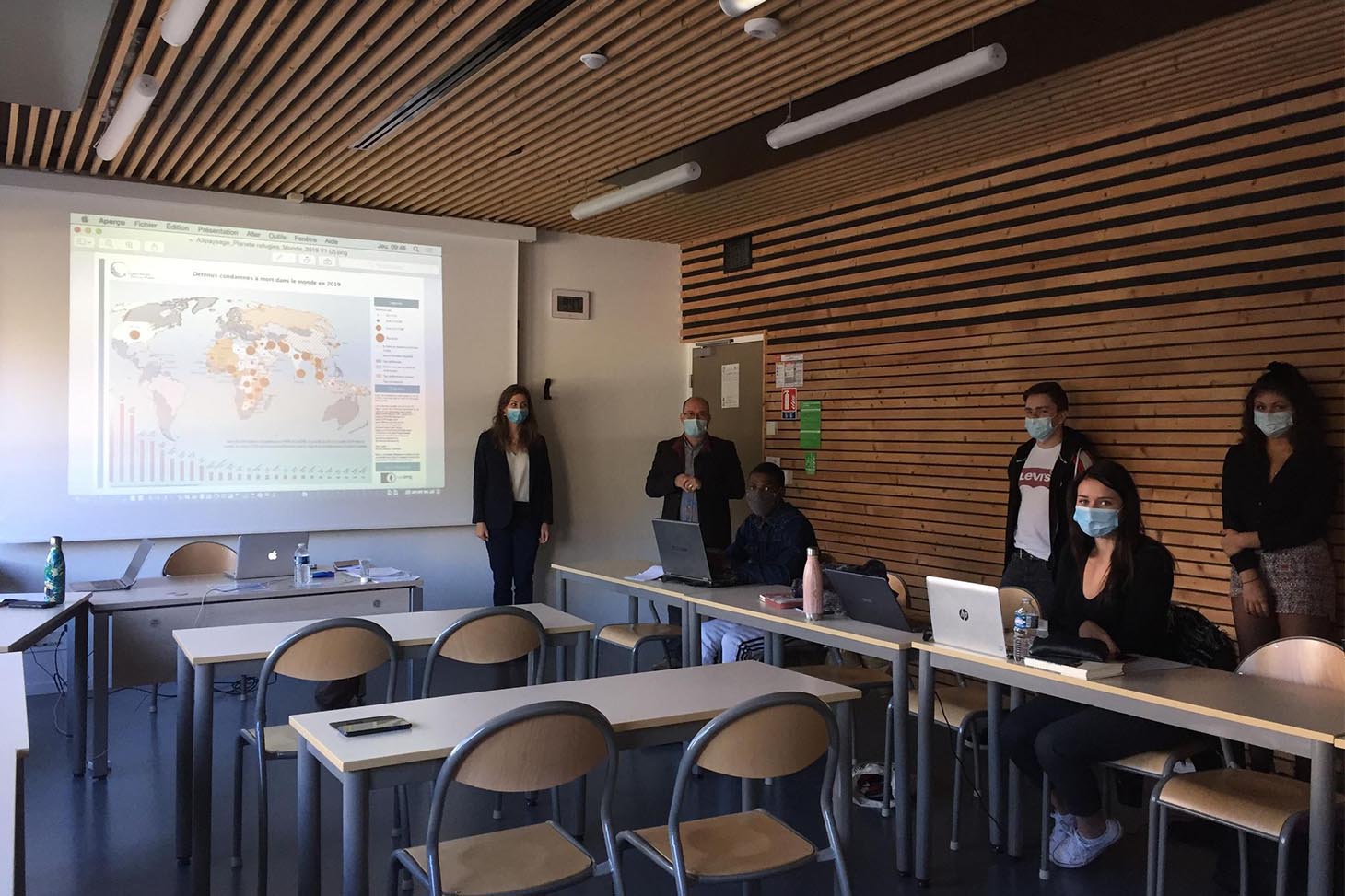
Kick-off meeting for the third year of the clinical project on civil liberties led by Planète Réfugiés-Droits de l'Homme (PRDH) and the Grenoble Law School on standards for the detention and treatment of death row inmates around the world. A renewed and motivated team despite the coronavirus!
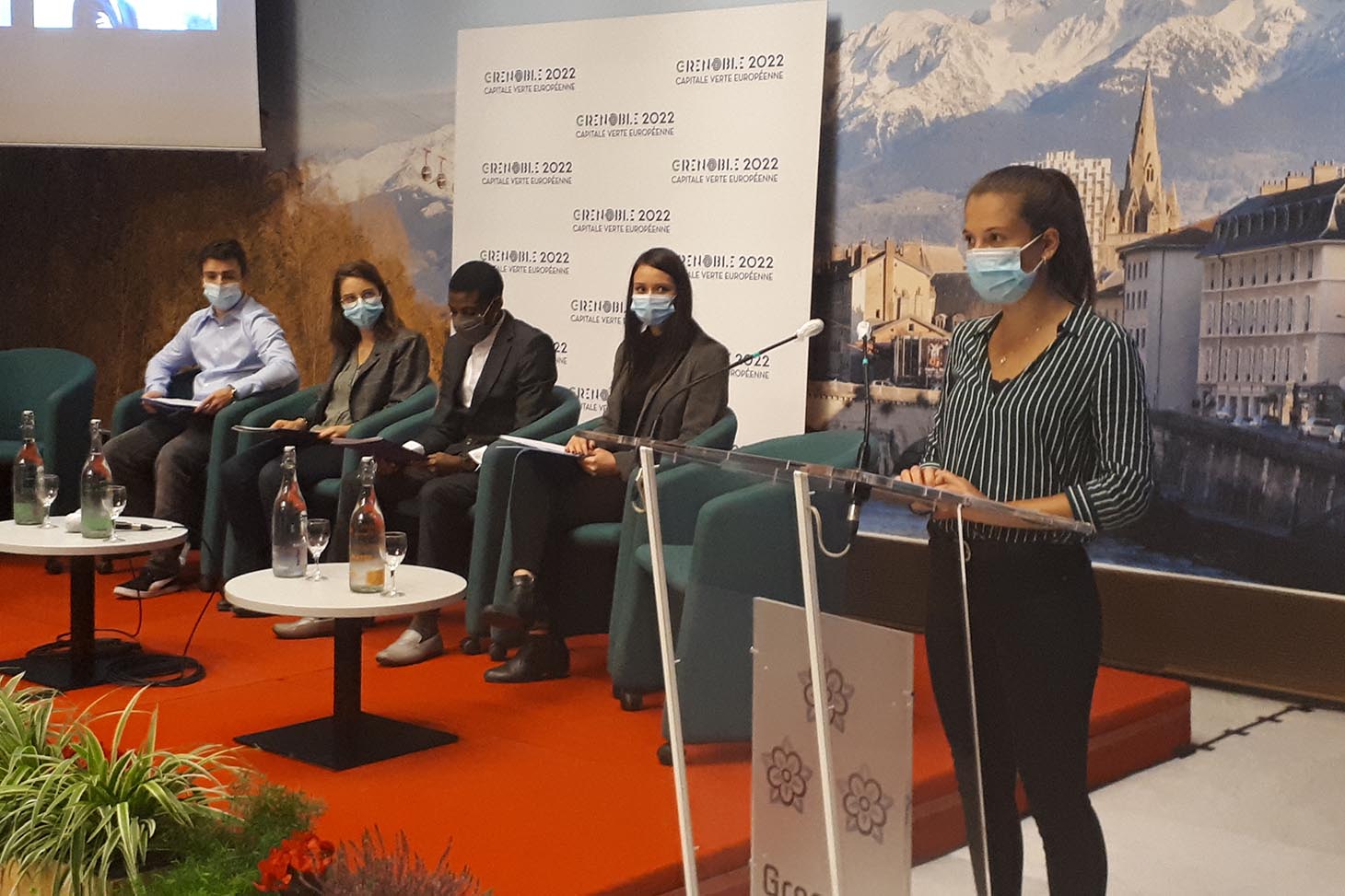
On World Day Against the Death Penalty, the Legal Clinic for Civil Liberties at the Grenoble Law School and the association Planète Réfugiés-Droits de l'Homme (PRDH) organized a conference on the conditions of detention and treatment of death row inmates around the world and presented the current version of specific international standards proposed on this issue. Hosted in the salons of Grenoble City Hall, the conference was opened by the First Deputy Mayor of Grenoble, marking the City Hall's commitment to this issue.
> Download the event poster
The Legal Clinic for Civil Liberties, in partnership with the Legal Research Center (CRJ) of the Grenoble Law School and the NGO Planète Réfugiés-Droits de l'Homme (PRDH), is launching a call for academic papers in preparation for the international symposium entitled "Death Penalty, Criminal Policy, and Conditions of Detention for Death Row Inmates," scheduled for March 5, 2021, atUniversité Grenoble Alpes.
This call for papers and symposium are part of an ongoing project led by the Civil Liberties Clinic of the Grenoble Law School, in partnership with the NGO Planète Réfugiés-Droits de l'Homme. The aim of this project is to draft a proposal for minimum standards concerning the conditions of detention and treatment of prisoners sentenced to death around the world, in addition to the United Nations Nelson Mandela Rules.
> Download the call for papers in French
> Download thecall forpapers inEnglish
The legal clinic of the Grenoble Faculty of Law and Planète Réfugiés-Droits de l'Homme organized a remote conference on the rights of prisoners sentenced to death around the world for the annual regional gathering of ACAT-France in the Isère/Alpes region. During the conference, three students from the Master 2 Fundamental Rights Litigation program presented a summary of their research on the conditions of detention and treatment of prisoners sentenced to death in Burma, Chad, and Palestine. Many questions were asked, particularly on the issue of the detention of minors sentenced to death and the minimum judicial guarantees governing deprivation of liberty.
> Download the map showing the number of prisoners sentenced to death worldwide in 2019