 Grenoble Law SchoolLaw at the top
For the 2019-2020 academic year, the legal clinic took on 10 projects. New this year is that Master 1 Mention Libertés students were fully integrated into the projects, alongside Master 2 "Fundamental Rights Litigation" students. All students were divided into groups for the various projects.
Each project is carried out in partnership with legal practitioners (lawyers, jurists, human rights consultants, associations) who supervise the students. The students are also supervised by academics.
The students' work is carried out within the framework of partnerships based on trust and confidentiality. For this reason, certain information must remain confidential.
The "Mobile Legal Team" (EJM) is an innovative initiative, unique in France, which aims to provide legal assistance to those who do not exercise their enforceable right to housing (DALO) and their enforceable right to accommodation (DAHO), while strengthening existing support services for the public. This experiment should make it possible to improve the identification and support of people in need of accommodation or housing, but also to answer administrative and legal questions relating to the preparation of a DALO/DAHO appeal file that arise for professionals or volunteers, associations or institutions supporting the people concerned.
The legal clinic specializing in civil liberties has been involved in the development of the program since its inception and has been involved in the project since 2017. The project involves four students from the Master 2 program in "Fundamental Rights Litigation," who benefit from a one-day-a-week internship during the academic year. Two of these students are then offered a six-month internship, from April to the end of September.
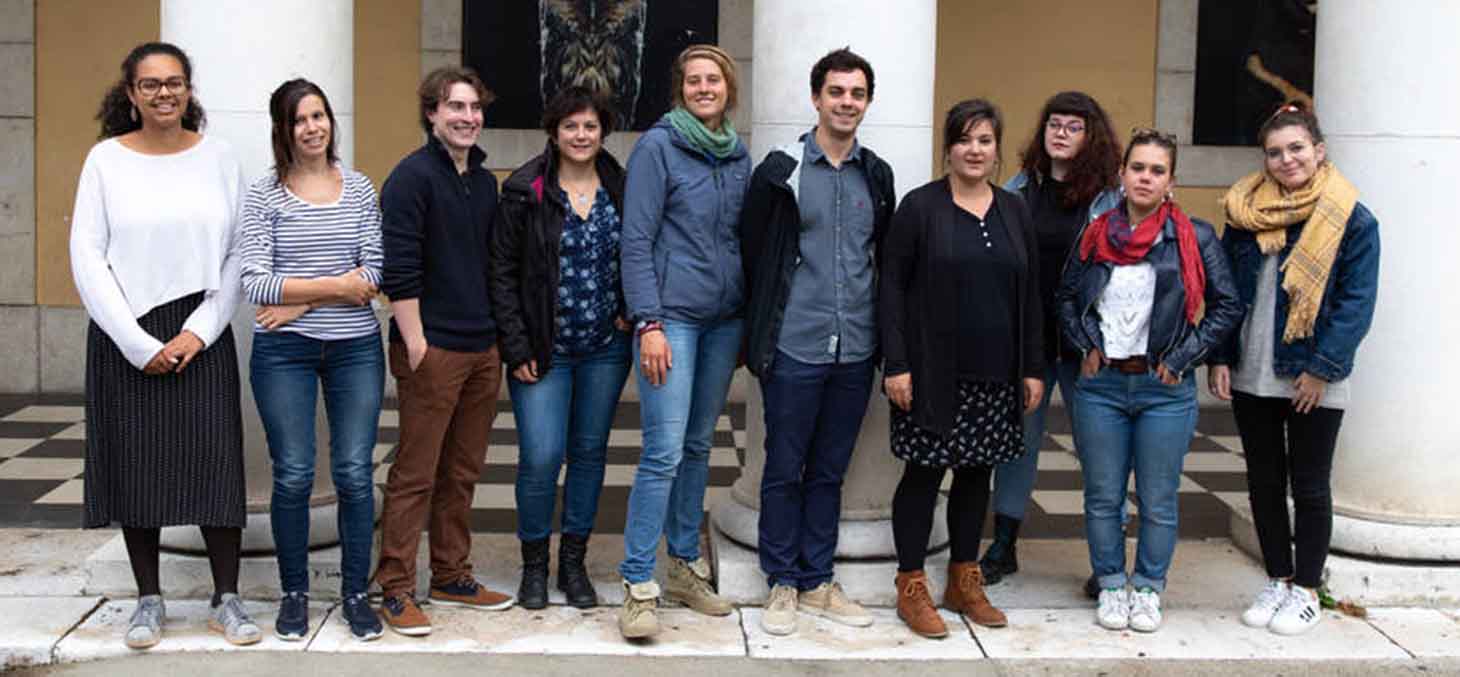
From left to right: Clara Eliot, legal intern; Aline Plumet, legal intern; Mickaël Idiart, legal intern; Eloïse Bernon, legal intern; Delphine Neven, legal intern; Pierre-Luc Fayolle, head of the EJM; Lauren Watrin, social worker; Marie Bouillon, peer worker; Alice Le Roy, lawyer; Lucie Poret, legal intern
> Download the EJM presentation flyer
> Get more information about this program
Students participate in legal research on the conditions of detention and treatment of death row inmates, in collaboration with French associations and/or partners in the field, with the aim of drafting international standards on the issue for advocacy purposes. This project was launched in 2018/2019 and will continue in 2020/2021. A first draft of international standards was completed at the end of the clinic's first two years, and this project will be completed during the clinic's 2020/2021 year, with legal and geopolitical research on more specific countries or topics. A symposium on this topic, to be held in October 2020, is currently being organized.
This project also includes a cartographic dimension developed in partnership with the CartONG association.
> Download the map of Bar Associations that signed the resolution on the adoption of specific minimum standards for the detention of death row inmates worldwide
> Download the map showing the number of prisoners sentenced to death worldwide in 2018
Thursday, October 3, 2019:
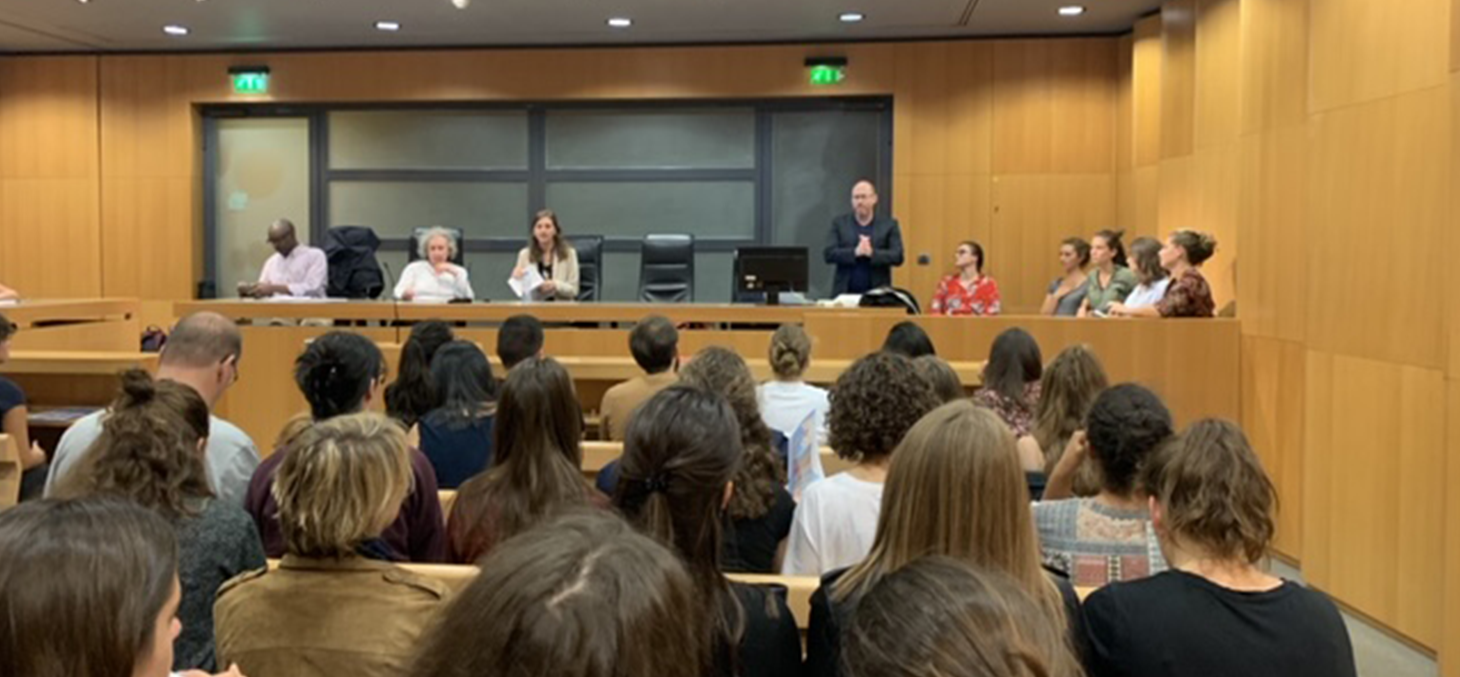
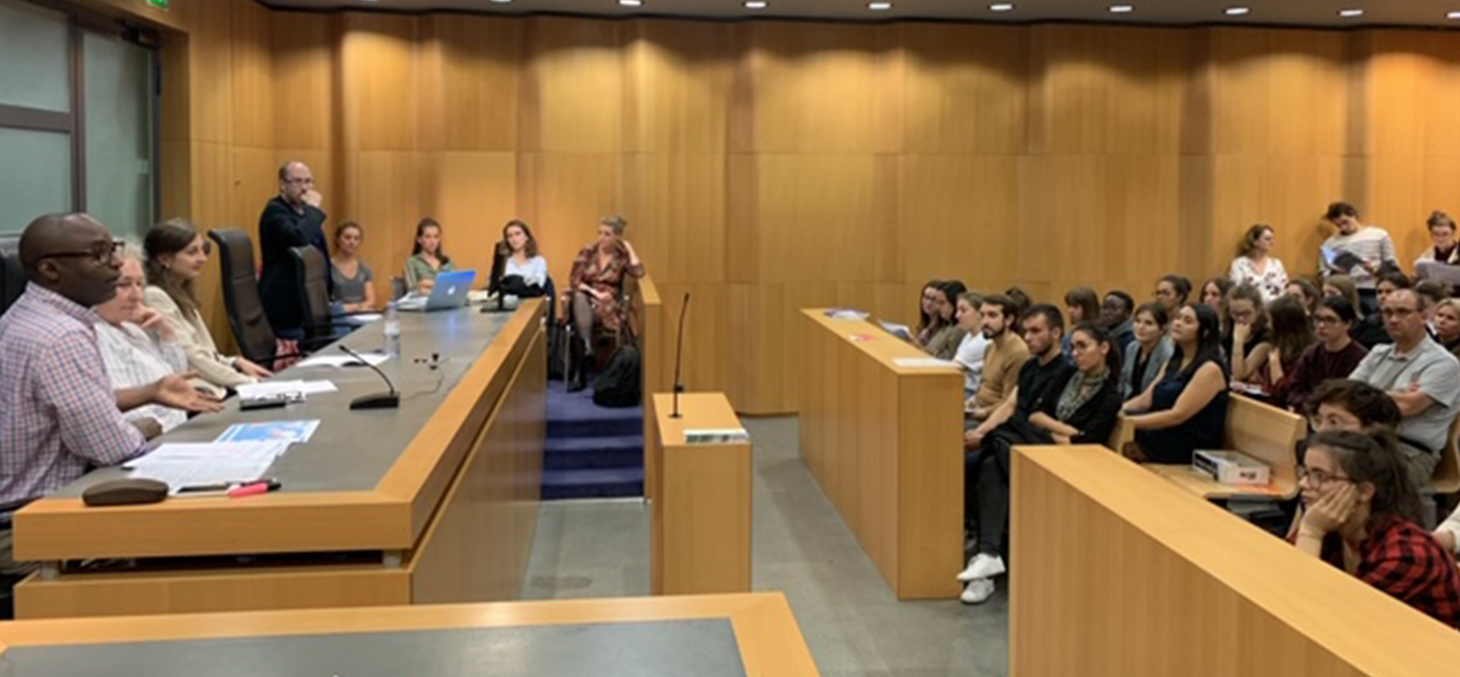
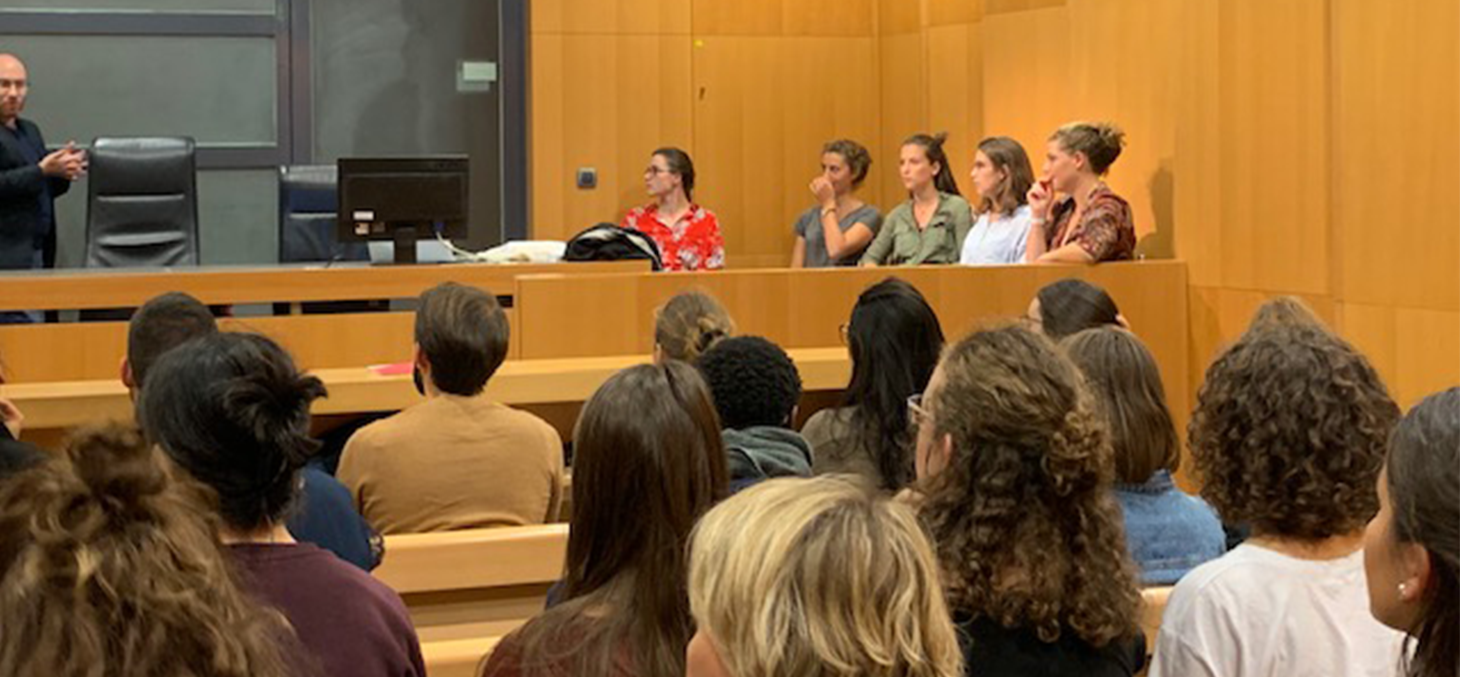
The Civil Liberties Clinic spoke at the Maison de l'International in Grenoble during a conference-debate on the conditions of detention and treatment of death row inmates around the world. The event was organized in partnership with Planète Réfugiés droits de l'homme, the Grenoble Bar Association's Human Rights Institute, Prison Insider, and Ensemble contre la peine de mort (ECPM).
With the participation of:
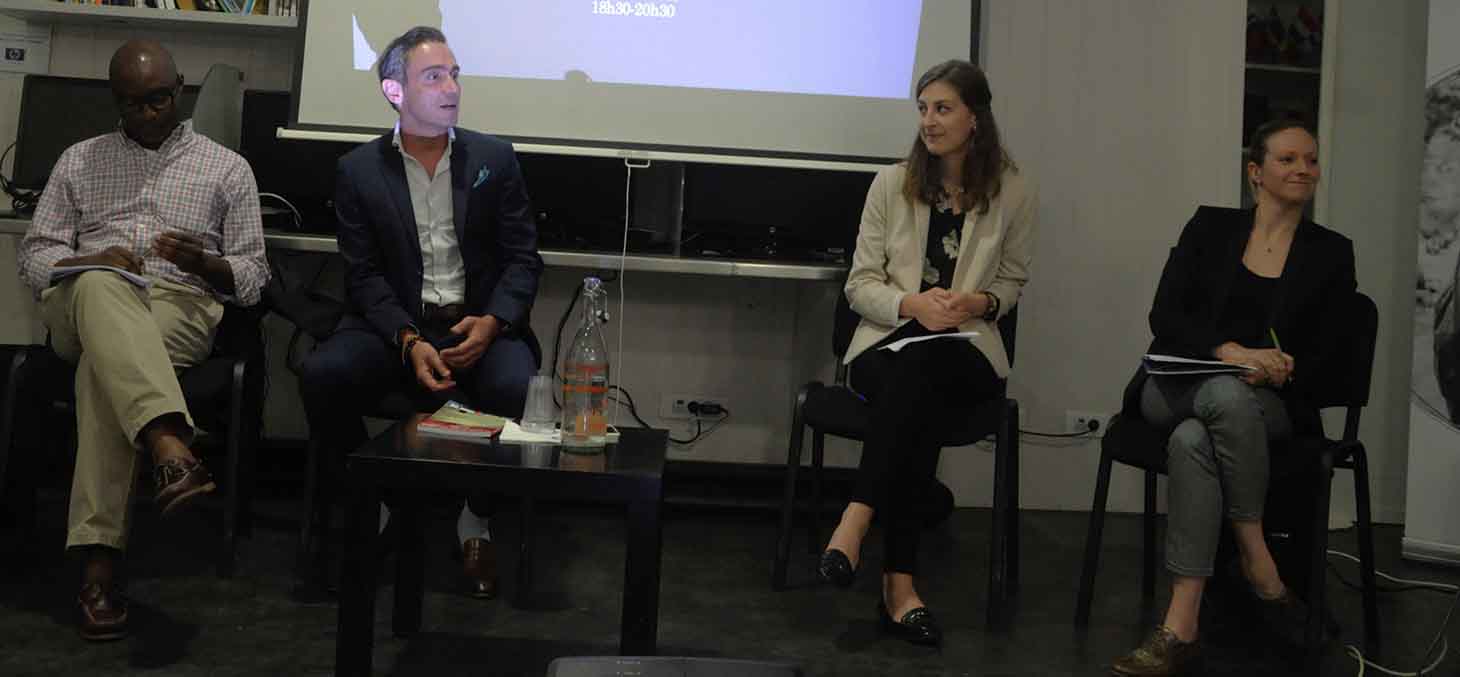
From left to right: Armand SAMBA SAMBELIGUE, Director of the Human Rights Institute of the Grenoble Bar Association; David ROGUET, President of the Grenoble Bar Association; Charlotte PHILIPPE, PhD student in international law at the Faculty of Law ofUniversité Grenoble Alpes, supervisor of the legal clinic on civil liberties; Ms. Coline CONSTANTIN, Coordinator of Comparative Studies, Prison Insider
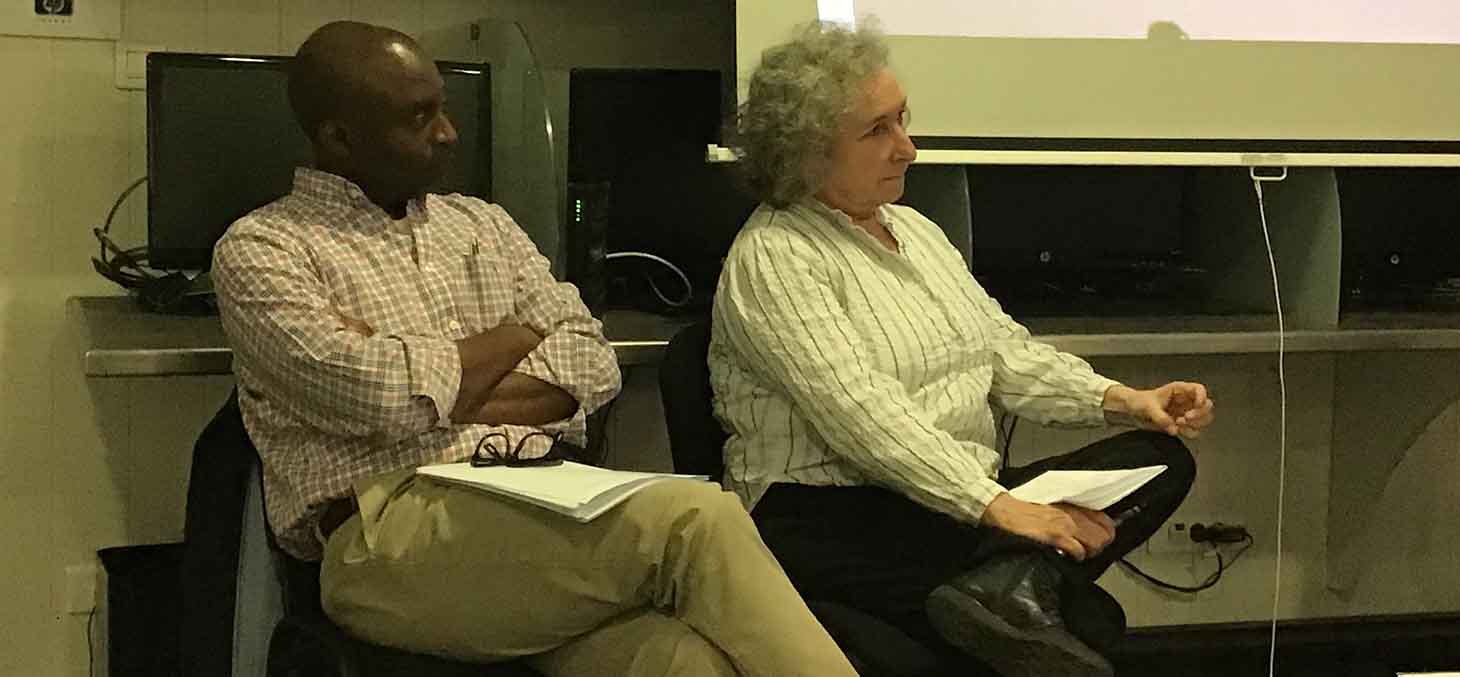
From left to right: Armand SAMBA SAMBELIGUE, Director of the Human Rights Institute of the Grenoble Bar Association; Sandrine AGEORGES-SKINNER, Administrator at Ensemble contre la peine de mort (Together Against the Death Penalty), Head of the Death Penalty/United States Project, Planète Réfugiés-Droits de l’Homme (PRDH) (Refugees and Human Rights Planet)
The Civil Liberties Clinic also intervened during the Night of Justice. The clinic's students read testimonies from death row inmates, and speakers presented the clinical project to a large audience, broadening the discussion on the issue of capital punishment. The event was organized in partnership with Planète Réfugiés droits de l'homme, the Grenoble Bar Association's Human Rights Institute, and Ensemble contre la peine de mort (ECPM).
With the participation of:
Several web meetings (one per month on average) were organized throughout the academic year to review the progress of the project in these three areas (legal research, political advocacy, and external communication).
Thursday, March 12, 2020:
A one-day legal writing workshop was organized on the draft international standards concerning the conditions of detention and treatment of death row inmates around the world. A first draft was completed at the end of this day of legal drafting and lively discussions.
For more information, see the dedicated page for this project on the website of our partner association Planète Réfugiés-Droits de l'Homme.
This project was carried out with students from the Master 1 Public Law program, specializing in civil liberties, in partnership with Métro and ComUE. The project focuses on the right to non-discrimination and equality, in both its legal and social dimensions. The aim is to prevent and actively combat all forms of discrimination within the scope of action of Métro and the former ComUE.
The students involved in the clinic actively participate in the monitoring groups of both partners (Metro and former ComUE). In particular, they have been closely involved in the legal analysis of the reports, which has enabled them to propose a legal classification of the reported facts and a response.
Student training session, by Maître Myriame MATARI, lawyer at the Lyon Bar Association
Students are required to conduct legal research with a view to drafting pre-litigation and litigation documents. This project was conducted in English.
In collaboration with three separate partners (lawyers and associations), students participate in the legal processing and litigation of real cases involving immigrants' rights.
The students worked with a foreign lawyer on real cases brought before the European Court of Human Rights. This project was conducted in English.
This project was carried out with students from the Master 1 International and European Law program.
Some of these students participated in legal research on the care of victims of sexual violence in the Democratic Republic of Congo (DRC).
Other students participated in legal research on detention conditions in Congo, in collaboration withthe British NGO Contra Nocendi. This project was conducted partly in English.
This project was carried out with students from the Master 1 Criminal Law program.
The students worked on the internal communication system at Varces prison in order to improve the information provided to inmates about their rights. This project involved several visits to Varces prison, where the students met with inmates and prison staff.