Testimonials from Mr. Rosset-Boulon, former student of the Master's 2 program in Banking and Wealth Management Law, and Mr. Martiner, branch manager at Crédit Agricole Sud Rhône-Alpes.
The Master 2 program in Banking and Wealth Management Law was launched in September 2016 at the Law School . Organized in partnership with the Center for Banking Professional Training (CFPB), this program is primarily intended for work-study students who are affiliated with a banking institution through a professional training contract. We spoke with Mr. Florian Rosset-Boulon, a former student of this program who is now a Specialist Advisor for Savings and Financial Investments at Crédit Agricole Sud Rhône-Alpes—where he completed his work-study program—as well as Mr. Martiner, a branch manager at the same bank.
Interview with Mr. Florian Rosset-Boulon, a graduate of the Law School :
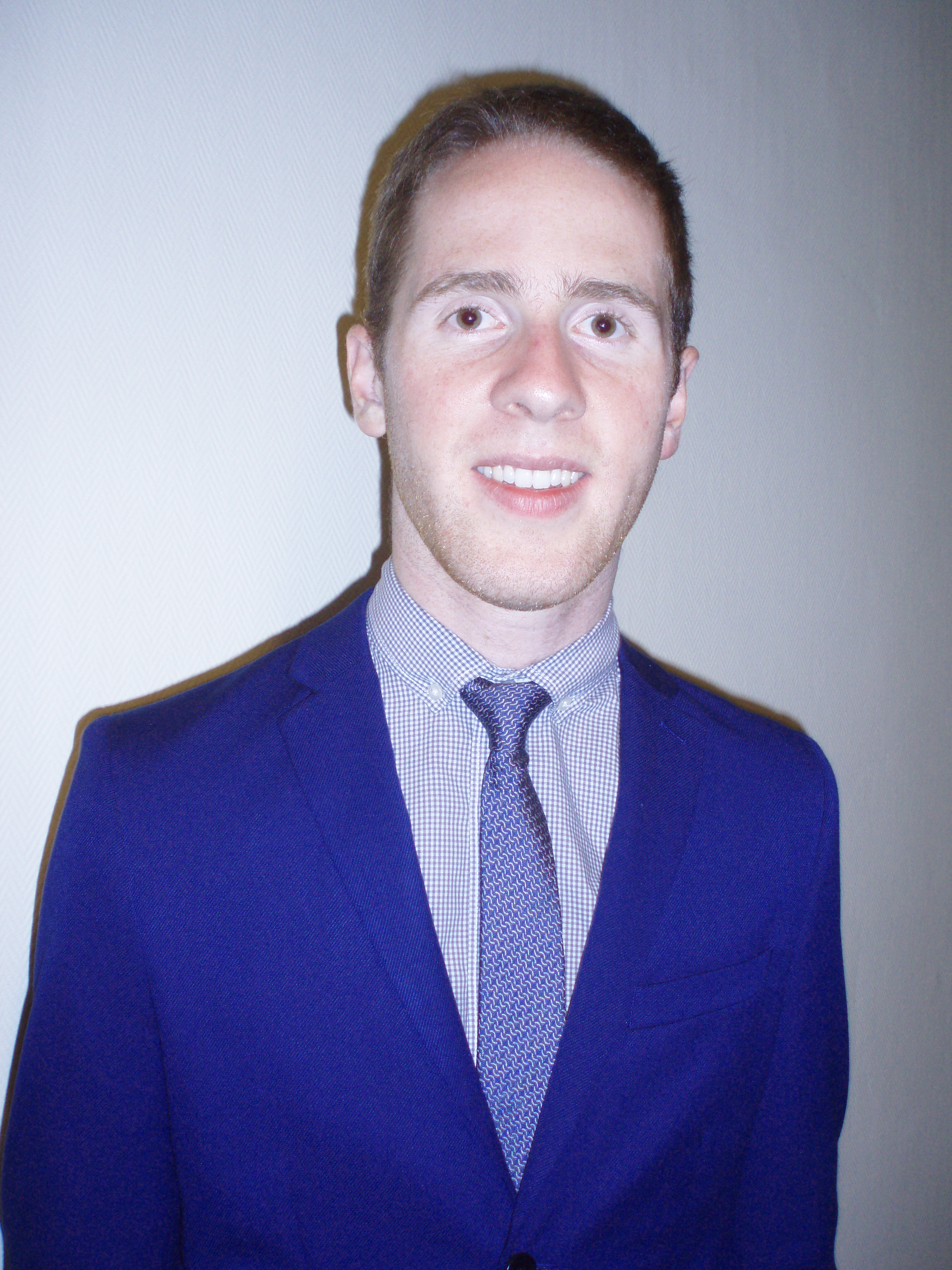 What is your academic background?
I began my academic career with a DUT in Legal Careers, specializing in banking and insurance, at IUT2 in Grenoble. Wanting to continue my studies, I went on to the Law School , where I earned a bachelor’s degree and then a first-year master’s degree with a focus on private law. After completing a second-year master’s degree in notarial law, I decided to shift my focus to wealth management in order to have more client interaction in my professional life. I therefore applied to the Master’s in Banking and Wealth Management the year that program was launched.
Why did you choose this master's degree?
I was immediately sold on this program because I was looking for a work-study master’s degree that would give me professional experience in the banking sector. This program allows you to gain experience and build a professional network in just one year. The fact that it leads to an M2 degree from the Law School, the CFPB’s Wealth Management Advisor certificate, and the AMF
(1) and the Voltaire certificate
(2) influenced my choice over other more traditional courses. Finally, knowledge of law, taxation, and inheritance is useful for advising wealth management clients and being a true professional.
How did you find your host organization?
I knew that finding a work-study program would be very difficult. I started looking in February. It was tough at first, but then I attended a banking and insurance job fair where I applied to Crédit Agricole. I had an initial 10-minute interview at the forum, followed by a 75-minute interview with the regional director and branch manager, which proved to be successful.
During the interviews, I emphasized my professional experience. I had completed two internships at a notary's office during my technical degree and worked two summers as a cashier.
But above all, I worked as a rental agent in a real estate agency in Grenoble for two summers in a row. This was my key argument to demonstrate my commercial appetite. My two-month internship in real estate appraisal at a notary's office also counted.
What position did you hold during your work-study program?
I did my work-study program at Crédit Agricole Sud Rhône Alpes as a specialist advisor in savings and financial investments. I had a mobility clause covering the south-east Lyon region (Vienne, Péage de Roussillon, Beaurepaire, St Symphorien d'Ozon), so I traveled around quite a bit.
From September to December, I worked in reception, sales prospecting, and conducted interviews in pairs. The goal was to master the company's products, procedures, and organization. From January to September, I conducted interviews alone (savings, PEA
(3), PEL
(4), life insurance, consumer credit, mortgage refinancing, establishing relationships, etc.). This allowed me to prove myself in the commercial field.
I earned €1,001 net per month.
How did your work-study program go?
The pace was very intense: 39 hours per week at the company (plus commuting time) and 35 hours per week of classes. Fortunately, the midterms were spread out relatively evenly throughout the year. I had very little time off because the time I did take off was spent studying. My evenings were also long as I worked on my thesis.
The main challenge is to perform well at school and at work. The requirements are not the same. You also have to fight to advance your professional skills and open up new opportunities.
Nothing will happen on its own... You have to work very consistently at the faculty because it's impossible to revise a whole semester's worth of material in four days while working. You have to start writing your thesis in February with a very detailed plan so that you don't get stuck with the June exams. At work, you have to ask questions, show interest, and demonstrate that you want to progress.
What is your current position?
I was hired on a permanent contract as a specialist savings and financial investment advisor at Crédit Agricole in Beaurepaire on September 9, 2017. I was hired immediately after completing my work-study program (the regional director approved my application).
Most of my objectives relate to savings (open-ended funds, bonds, PEA savings plans, management mandates, Pinel schemes, etc.). I also have to sell property and casualty insurance.
(5), establishing relationships, loans, loan restructuring, etc., in a more ancillary manner.
I earn €30,000 gross per year, plus profit sharing, bearing in mind that a large part of the salary is variable (depending on the achievement of objectives).
Interview with Mr. Martiner, branch manager at Crédit Agricole Sud Rhône-Alpes:
What criteria did you use to select your work-study student?
Crédit Agricole Sud Rhône Alpes recruits work-study students at various levels (bac+3 and bac+5). The training programs are diverse: IAE, business school, university. The student's personality and commercial profile are, of course, key factors in the hiring interview.
Oral fluency, customer service skills, and experience in sales will be taken into account. Training must also be tailored to the needs of the company.
Are you satisfied with the Master’s in Banking and Wealth Management Law program offered by the Law School ?
This training program has proven its worth. Students have acquired legal and tax skills. Business and customer relations skills were taught by professors from the CFPB, of which Crédit Agricole is a partner.
What do you think are the advantages of a professional training contract?
The professional training contract allows young employees to be trained in the company's methods and products. This type of contract is also a good way to recruit future employees.
Does your bank regularly use this type of contract?
Yes, more than 70 young people are taken on each year by Crédit Agricole Sud Rhône Alpes in various fields: HR, accounting, communications, business center, etc. The vast majority of recruitment is for the network (for individuals and businesses).
Did you plan to hire your work-study student after their professional training contract?
It all depends on whether the year has been successful professionally. Geographic and functional mobility have a huge influence.
Do you plan to repeat the experience of a professional training contract with another student from this program?
Crédit Agricole Sud Rhône Alpes repeated the experience with this training program for the 2017-2018 academic year.

 Law School Law at the Top