
 Law School Law at the Top
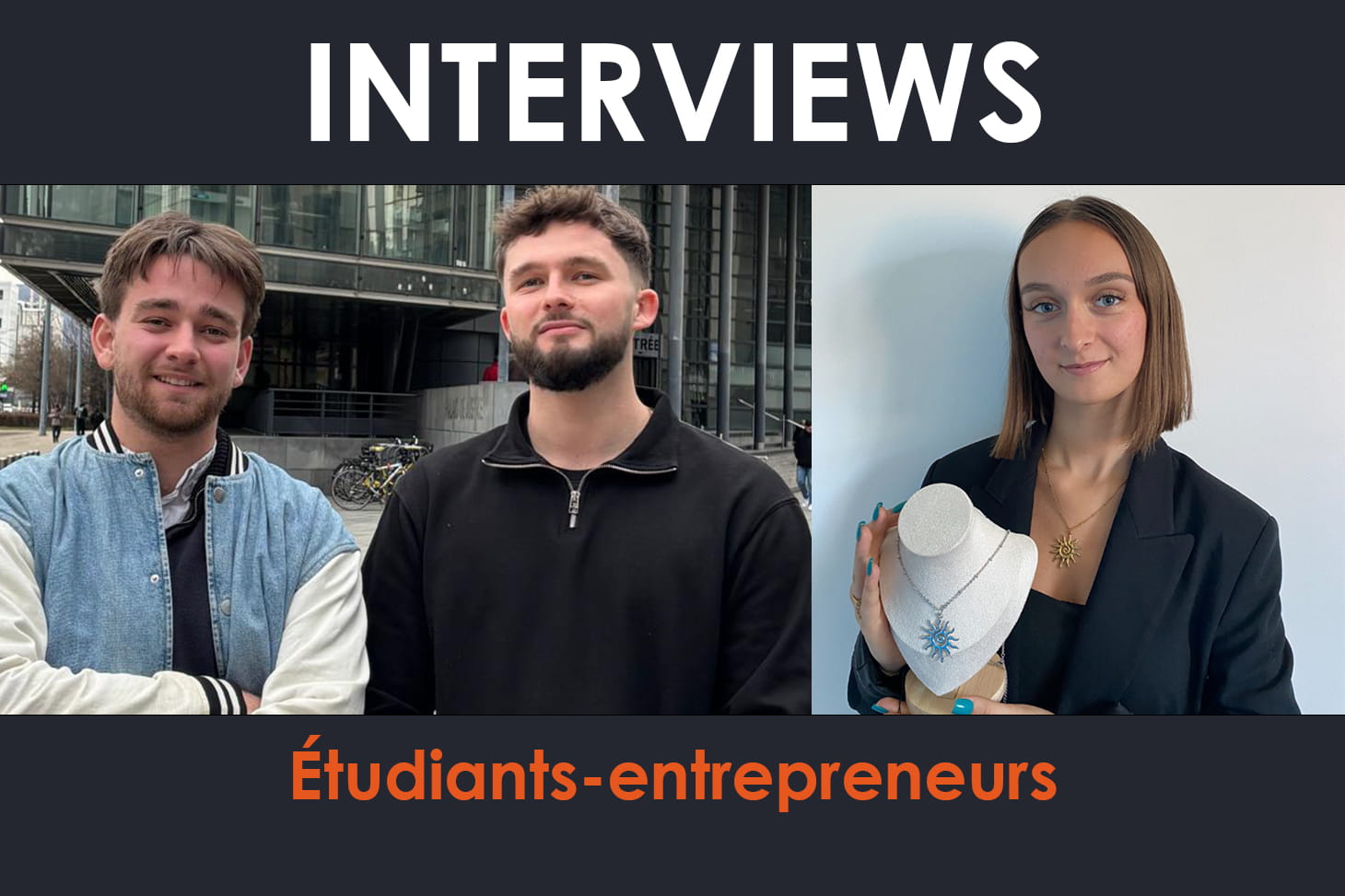
Meet Thomas Dolard, a Master’s 2 student in Justice, Trials, and Procedures at the Law School a dual degree with Grenoble Ecole de Management (GEM), and Simon Daveau, a first-year Master’s student in Finance at GEM; both are co-founders of the company LexMatch.
Thomas: I’ve been working on the LexMatch project for two years. Simon joined me a year ago. It’s a platform that connects people seeking legal advice or representation with lawyers. It’s like a Doctolib for the legal field! The innovative aspect is that the public can access a free chatbot (software that simulates a dialogue with a user) that serves several purposes:
This platform serves two purposes: to make the law clearer and more accessible to everyone, and to provide visibility to lawyers who are facing increased competition. The platform, which is free for users, will be funded by professionals who will have to pay to be listed on it.
Simon: We receive support from several organizations. First of all, there’s IncubaGEM, which, among other things, provides us with a mentor who offers advice and emotional support. There’s also Pépite oZer, which helps us through support specialists who easily adapt to our specific challenges, as well as free training on key stages of entrepreneurship (market research, marketing, communication, etc.). Recently, we also secured office space at MUSE to grow our business. And Pépite oZer also provides us with—above all—an ecosystem that is highly beneficial to the development of our project.
Thomas: We’re also in contact with faculty members from the Law School in legal AI, Dr. Géraldine Vial and Dr. Etienne Vergès. And, financially, we’re supported by the MIAI Cluster (Multidisciplinary Institute in Artificial Intelligence) at UGA, which awarded us a grant.
Having student-entrepreneur status at UGA also allows us to adjust our academic schedules, as I will be completing my end-of-year internship at my own company and Simon will be taking an entrepreneurial gap year. It also gives us access to major events like Tech&Fest, which we were able to attend under the UGA banner—this helped us gain visibility and meet key players in the local ecosystem.
Overall, we’ve noticed that people who get support from organizations while developing their projects tend to succeed better. It helps reduce stress—and so does having a partner!
Thomas: Being a student-entrepreneur requires discipline and rigor; it can be difficult at times, but overall we manage just fine—especially since we love what we do. There can sometimes be a bit of frustration because we’d like to focus a little more on the project, but our studies come first.
Simon: The key word is organization! Organizing your time, your goals…Even in a master’s program, we still have a lot of classes, and our studies are important because we want to finish our degree successfully. Another key element is knowing how to bounce back, because as an entrepreneur, you’re bound to encounter obstacles, and you can’t stop at the first one. We’re in a state of instability, but that’s also what makes it stimulating. The path to learning is all about hitting walls!
Thomas: This project lets us meet a lot of people—fascinating individuals who give us incredible feedback. We’re also developing a wide range of skills across many different fields.
Simon: Thanks to this project, we’re expanding our network exponentially, becoming more curious, and opening ourselves up to innovation… which is very rewarding. On a personal level, it also prompts some interesting self-reflection: we have to prioritize tasks, think about what we love, what we want to do in life... It’s good to grapple with these questions when you’re young. I feel like I’ve changed a lot in the way I do things over the past year.
Thomas: Even though our digital solution isn’t quite ready yet, we’re already starting to connect people—for free—to test the concept and build our network.
Simon: We currently have about fifteen lawyers on board. And we also need users to try out the platform! The first version, designed by professional developers, will serve as a test version. We’re focused on collaborative development.
Thomas: The platform will launch in 2026. For now, we have a temporary showcase site:www.lexmatch.fr. Our long-term goal is to expand the concept to other legal professions: notaries, bailiffs, intellectual property advisors... We’re starting in the Grenoble area with the goal of expanding our reach to the entire Auvergne-Rhône-Alpes region—and why not all of France! We love to create, and this field is truly close to our hearts, so we’ll do everything we can to make it work.
Simon: Ultimately , if we give it our all, it’s to build a company that reflects who we are and to launch ourselves as entrepreneurs in the professional world! (temporary showcase website: www.lexmatch.fr)
Read the interview with Léna Aguettaz, a law student in Grenoble and designer of stainless steel jewelry.
I started my business, “Créa’Léna,” a year ago, during my senior year of high school. I’ve always been creative; I used to do arts and crafts (painting, drawing, land art…) and, by chance, I discovered jewelry making. At first, I looked into the entrepreneur status with the Chamber of Trades, which helped me, and I asked other entrepreneurs for advice. The process was relatively simple, and I saw the financial potential in developing this business alongside my studies. Then, when I enrolled at UGA, I took the steps to obtain student-entrepreneur status.
My business grew very quickly. I had very low sales at first, but I soon started seeing spikes in activity during certain times of the year: Mother’s Day, the summer, and Christmas. My revenue is now fairly stable.
To sell my creations, I showcase them on my website (crea-lena.com) and my Instagram account (www.instagram.com/crea_lena). I also sell at markets and in various retail locations (organic stores, beauty salons, tattoo parlors, artisan shops...).
To grow my business, I rely heavily on partnerships with other professionals. I work with photographers, designers, makeup artists, and more. In addition, I’ve developed a real interest in event planning, whether to support causes close to my heart (for example, I offered free jewelry-making workshops in hospitals during Pink October) or to promote my creations (I collaborate, for instance, with Miss pageant committees). This year, I’m organizing a fashion show featuring professional designers and amateurs aged 16 to 26.
Pépite oZer is a fairly flexible program: you can get as involved as you like, depending on your needs. It offers a wide range of resources and provides plenty of opportunities.
I’ve taken part in many workshops and training sessions funded by Pépite oZer. I’ve also taken advantage of the opportunity to have a mentor guide me. She’s an entrepreneur I meet with every month to discuss my project, and she can connect me with other professionals if needed. I also regularly attend the “Apér’oZer” events, which are open to everyone and give you the chance to meet an entrepreneur who shares their experience. Networking is so important for growing a business!
Pépite oZer also provides us with coworking spaces that foster collaboration among student entrepreneurs. For example, I’m partnering with a student who created a platform connecting individuals with wedding professionals. There’s a lot of mutual support; we meet to take turns brainstorming each other’s projects, offering solutions, and getting advice to avoid repeating certain mistakes. It’s essential that we support one another because, as entrepreneurs, we aren’t always understood by those around us. That can be scary, and it’s important not to let yourself get discouraged. Pépite oZer provides a non-judgmental entrepreneurial community, and I’ve found the support I needed there.
I organize my schedule so that I can prepare for my law seminars during the week and have the weekends free for my business, especially for setting up exhibits or doing photo shoots. I can also design my jewelry in the evenings. It’s possible to balance both. And I even think that running a business is a key to success because it helps clear my head and keeps me organized so I can meet deadlines. You focus on what’s essential and study more effectively!
But I’m also very frustrated that I can’t grow my business as much as I’d like. Sometimes I have to turn down opportunities because I have class... Actually, my biggest challenge is just how much I love my business!
On a personal level, it’s incredible. It builds self-confidence, independence, an open mind, and leads to many wonderful encounters. You also discover yourself by starting your own business.
On an academic level, running a business helps you learn to organize yourself better and put things into perspective when faced with failure—because you’re bound to encounter setbacks when you start a business.
Professionally, the advantage of a micro-business is that you don’t delegate anything, so you explore many different areas (accounting, sales, communication...) and then realize what you like and what you don’t. For my part, I discovered that I have a passion for communications and event planning. So I’m definitely going to continue down this path to further grow my business, given all it brings me—come what may!