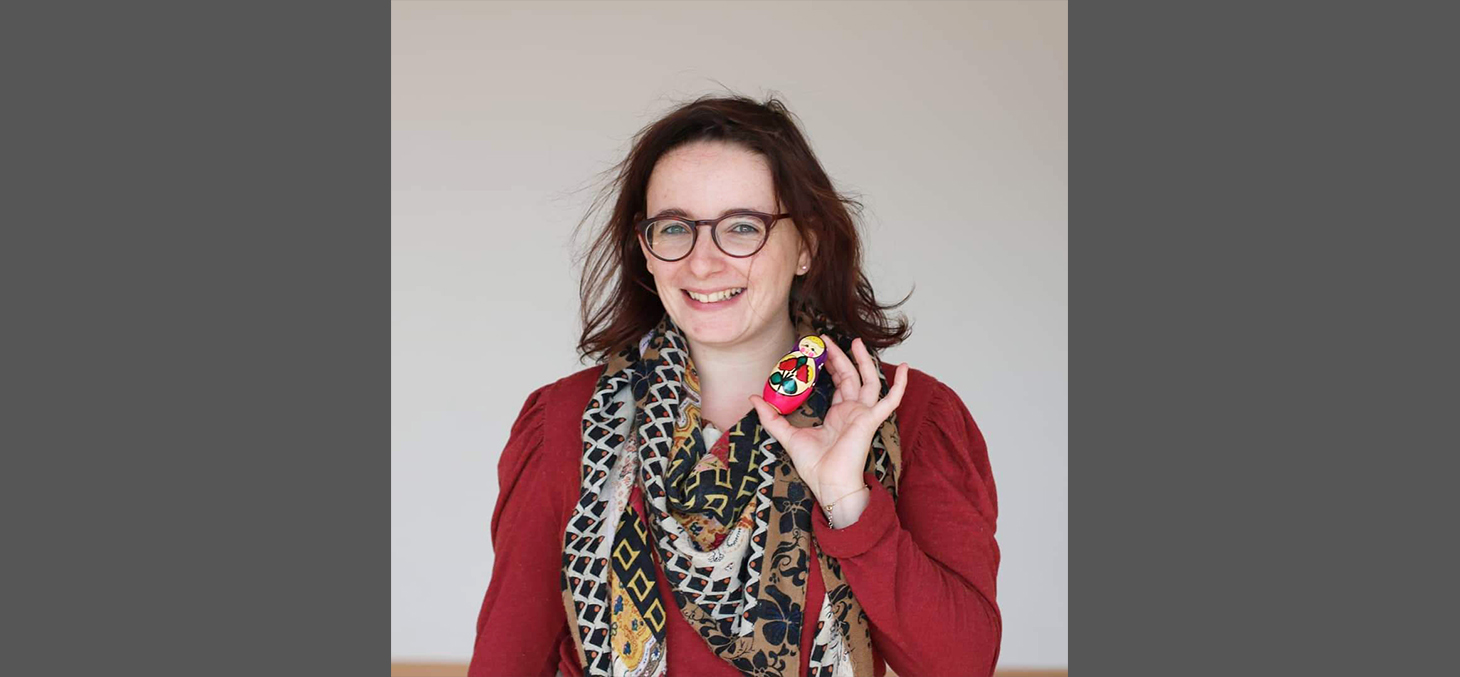
Meeting with Lencka Popravka, doctoral student at EDSJ
Education, Student Life
Photo Université Grenoble Alpes Community Université Grenoble Alpes "My thesis in 180 seconds 2019"
Read the testimonial of Ms. Lencka Popravka, a doctoral student at the Grenoble School of Law and regional finalist in the "My Thesis in 180 Seconds" competition.
What is your current situation?
I am a third-year doctoral student and teaching assistant in European Union law. I work under the supervision of Professor Catherine Schneider.
What is the topic of your thesis?
My topic concerns the monitoring of European Union values through the lens of Article 7 of the Treaty on European Union.
Why did you choose to participate in the "My Thesis in 180 Seconds" competition?
I was looking for two things in this competition. First, to have a way to tackle my thesis while getting out of the confines of research. Second, to find methods of popularization that are suitable for legal sciences.
What does this contest involve?
It is a popularization or science communication competition that requires candidates to gather their thoughts and explain in 180 seconds what they are actually doing in their thesis and why it is important. The competition begins with public speaking training provided by a theater professional. Once the training is complete, candidates are selected...
How are candidates selected?
Out of 20 students in training, 15 were selected for the regional final. When it comes to selection criteria, there is always an element of subjectivity, but what matters is the clarity of the message, the quality of oral expression, and stage presence. It is also important to convey the subject of your thesis and its significance.
What are the different stages of the competition?
After the regional final comes the national semi-final, then the national final, and finally the Francophonie final. Each time, the jury is composed of an expert from the academic world, a journalism and communications professional, a prominent figure from the business world, and a doctoral student who participated in a previous edition of the competition.
How did you prepare for this competition?
I presented my text at the beginning of each training workshop. There are two ways to approach the exercise: either you learn your speech by heart, or you just remember the structure and form sentences on the spot. I chose the second option, which allows you to correct your text without panicking if you see that you are not keeping up with the clock!
What place did you get in the competition?
I was a regional finalist, but I wasn't selected for the national final, which will take place in Grenoble, at the MC2, on June 13. The standard was high this year; there were no poor performances. There is no ranking among the finalists, but I knew that my performance had been appreciated by the jury and the audience, so I'm satisfied!
How do you feel about this contest?
I highly recommend it because it provides useful skills for academic and professional life. Standing in front of an audience of 500 people is a daunting experience, but it prepares us to speak in front of students. However, if I had to name one limitation of this competition, it would be its format, which tends to favor candidates who study hard sciences that are not well known to the general public. Their complex terminology often hides realities that are easy to understand, whereas in legal sciences, the opposite is true! The terms we use seem basic, but they are actually much more subtle, which is difficult to explain.
What advice would you give to doctoral students wishing to prepare for the exam?
You have to go for it! I was the only one studying law; most of the candidates came from the hard sciences... You mustn't feel like you don't belong.
What are your career plans?
I want to become a teacher-researcher, if possible in Grenoble, but I will go wherever I can practice!
Published on April 29, 2019
Updated on July 1, 2024
Share linkCopyCopyClose modal windowShare this page URLI recommend this page:Available at this address :The page will then be accessible from your "My favorites" menu.Stop videoPlay videoMute soundPlay soundChat: Got a question?Chatbot Robo FabricaMatomo visitor statisticsX (formerly Twitter)
 Grenoble Law SchoolLaw at the top