Presentation of the Jean Monnet Chair awarded to Professor Romain Tinière
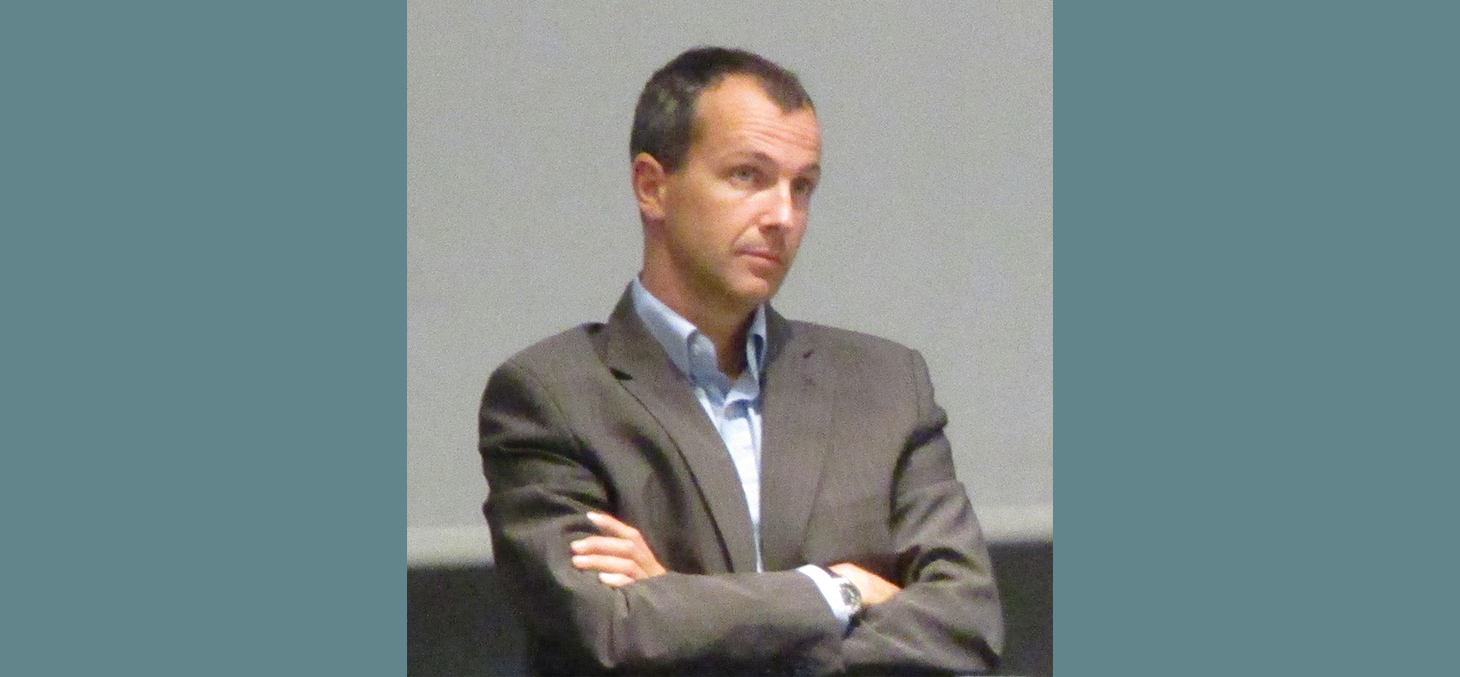
Romain Tinière - photo from the Jean Monnet Center of Excellence
Read the interview with Romain Tinière, Professor of Public Law at the Faculty of Law of Grenoble, head of the Master 2 program in European Legal Careers, and member of the Center for Legal Research, about his Jean Monnet Chair.
What is a Jean Monnet Chair?
Jean Monnet Chairs aim to promote excellence in teaching and research in the field of European studies, including European law. In concrete terms, this involves funding from the European Union to carry out a teaching and research program related to the Union.
How did you obtain your funding?
I was awarded €50,000 in funding over three years, from 2018 to 2021. To obtain this funding, I responded to a call for proposals. Every year in February, the European Commission launches a campaign and selects candidates based on their applications. Only a few chairs in European Union law are awarded each year in France.
What is the theme of your chair?
Le projet que j’ai proposé pour obtenir cette chaire porte sur la charte des droits fondamentaux de l’Union européenne. Cet instrument qui regroupe les différents droits fondamentaux garantis par l’Union européenne est récent et encore assez peu connu des justiciables, des juges, voire même des enseignants-chercheurs (!).
What is the purpose of this chair?
Its objective is to disseminate knowledge about this Charter to a wide range of audiences.
Firstly, students. This involves the courses they are taught, particularly in the Master 2 programs in European Legal Careers and Fundamental Rights Litigation. I have also developed a new course on the European Union as part of the ETC (Enseignements Transversaux à Choix, or Cross-disciplinary Elective Courses) program, aimed at non-law students to raise awareness of the Union in general.
Then there is the audience of researchers and young researchers who conduct research on topics related to this charter. A doctoral seminar has already been held to discuss theses currently being written in this field. Next December, a conference will be organized on the 10th anniversary of the entry into force of the Charter of Fundamental Rights.
Professionals are also part of the target audience for training. To this end, I would like to develop continuing education courses for lawyers at EDARA (Rhône-Alpes Law School) and ENM on this topic. I would also like to set up a free, digital training module that would be made available to professionals. It would take the form of short videos on practical issues, with self-correcting exercises.
The final target audience is the general public. To try to reach them, I am posting informational videos online and will be organizing public conferences during the chair's term.
What are the challenges associated with this funding?
The challenge for the European Union is to raise its profile among different audiences, including students, teachers, researchers, and the general public, and to encourage discussion and reflection on European issues.
For me, obtaining this chair is recognition of my work and expertise in this field. It is also a three-year commitment during which the proposed project must be implemented. However, this funding is attractive because it gives the project leader a certain amount of freedom. We are given the necessary financial resources, and then all we have to do is find the human resources to implement the project!
Published on June 17, 2019
Updated on July 1, 2024
Share linkCopyCopyClose modal windowShare this page URLI recommend this page:Available at this address :The page will then be accessible from your "My favorites" menu.Stop videoPlay videoMute soundPlay soundChat: Got a question?Chatbot Robo FabricaMatomo visitor statisticsX (formerly Twitter)
 Grenoble Law SchoolLaw at the top